Success Metrics Framework
AI Dynamic Pricing - How We Measure Impact
Purpose: Define what "success" means for this AI product, how we measure it, and when we'd kill the feature.
1. Metrics Hierarchy
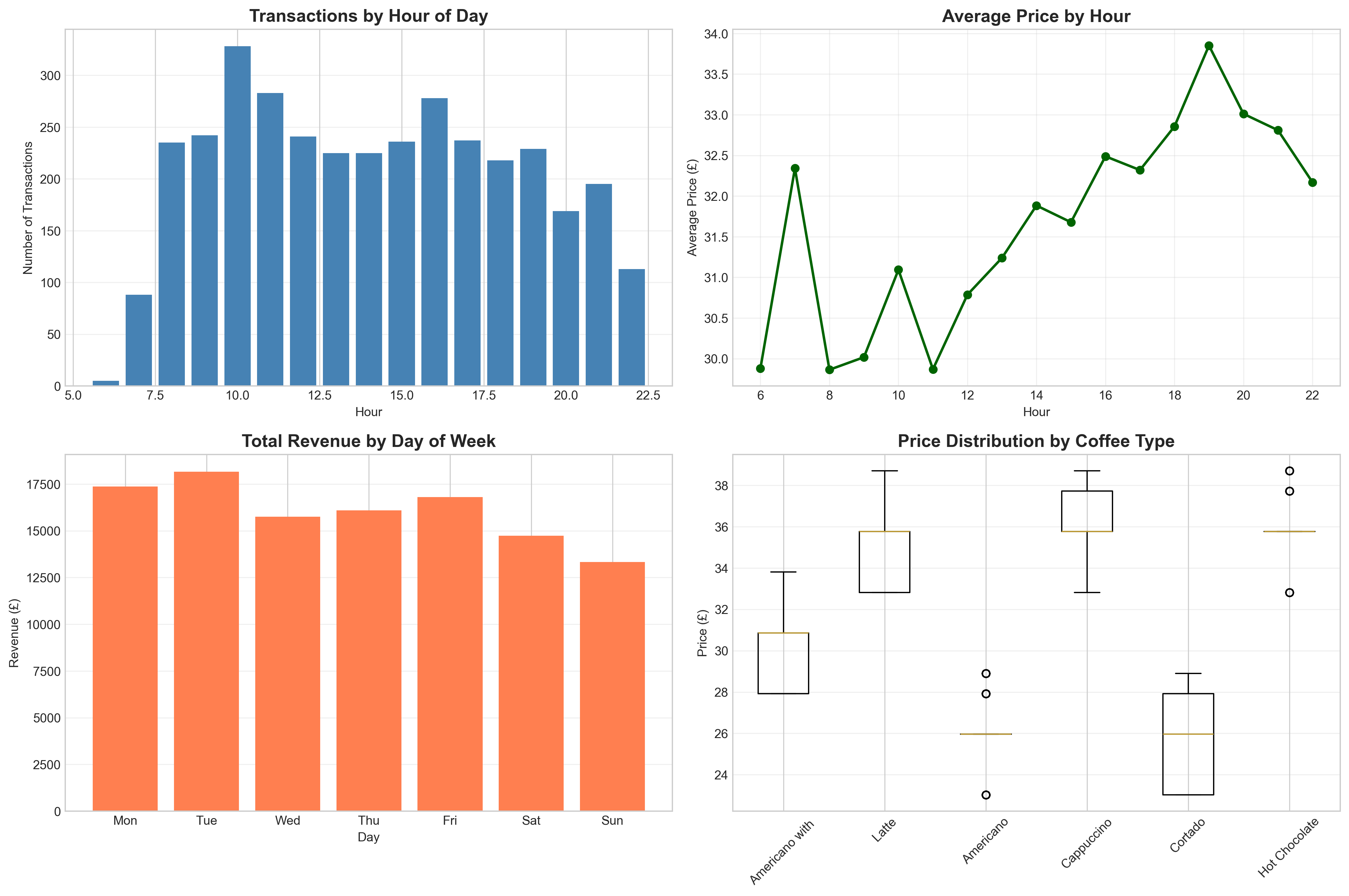
North Star Metric: Revenue Per Transaction (RPT)
↓
Primary Metrics (Must improve)
• Revenue Lift
• Customer Retention
• Price Acceptance Rate
↓
Secondary Metrics (Monitor closely)
• Model Performance (RMSE)
• Explainability Score
• System Reliability
↓
Counter-Metrics (Must NOT degrade)
• Customer Satisfaction
• Basket Size
• Brand Perception
2. North Star Metric
Revenue Per Transaction (RPT)
Definition: Average revenue generated per customer transaction
Why This Metric:
- Captures value creation without punishing traffic fluctuations
- Aligns business goal (revenue) with customer experience (transaction value)
- Can be optimized through better pricing without increasing costs
Formula:
RPT = Total Revenue / Total Transactions
Baseline: ₹4.20 (current static pricing)
Target: ₹4.62 (+10% lift by Month 3)
Stretch: ₹4.70 (+12% lift by Month 6)
How We Track:
- Daily calculation: Compare dynamic pricing days vs. baseline
- Weekly trend analysis: Is lift sustained or fading?
- Cohort analysis: RPT by customer segment (new vs. repeat)
3. Primary Metrics (OKR Framework)
Objective 1: Increase Revenue Without Hurting Retention
Key Result 1.1: Achieve 8-12% revenue lift vs. static pricing baseline
- Measurement: A/B test (50% transactions static, 50% dynamic) for 4 weeks
- Target: ≥8% lift with 95% confidence
- Tracking: Daily revenue dashboard (Streamlit app)
- Owner: Product Manager (me)
Key Result 1.2: Maintain ≥85% monthly customer retention
- Measurement: % of customers who transact in Month N and Month N+1
- Target: No degradation vs. pre-dynamic-pricing baseline
- Red Flag: <83% retention = immediate investigation
- Tracking: Monthly cohort analysis
- Owner: Customer Success
Key Result 1.3: Achieve 80% price acceptance rate from shop owners
- Measurement: % of AI recommendations accepted without modification
- Target: ≥80% by Month 2
- Insight: Low acceptance = explainability problem or poor recommendations
- Tracking: Recommendation logs (every override is logged with reason)
- Owner: Product Manager
Objective 2: Build Trust Through Explainability
Key Result 2.1: 90%+ of shop owners understand SHAP explanations
- Measurement: Post-onboarding survey (5-point Likert scale)
- Q: "I understand why the AI recommends each price" (Agree/Strongly Agree = pass)
- Target: 90% agree or strongly agree
- Red Flag: <70% = redesign explainability UI
- Tracking: Quarterly survey
- Owner: Product Designer + PM
Key Result 2.2: <3% customer complaint rate about pricing
- Measurement: Customer complaints per 1,000 transactions (owner-reported)
- Baseline: 2% (typical for any pricing)
- Target: <3% (dynamic pricing doesn't increase complaints)
- Red Flag: >5% = pause rollout, investigate
- Tracking: Weekly complaint log review
- Owner: Customer Success
4. Secondary Metrics (Leading Indicators)
Model Performance
| Metric | Target | Why It Matters |
|---|---|---|
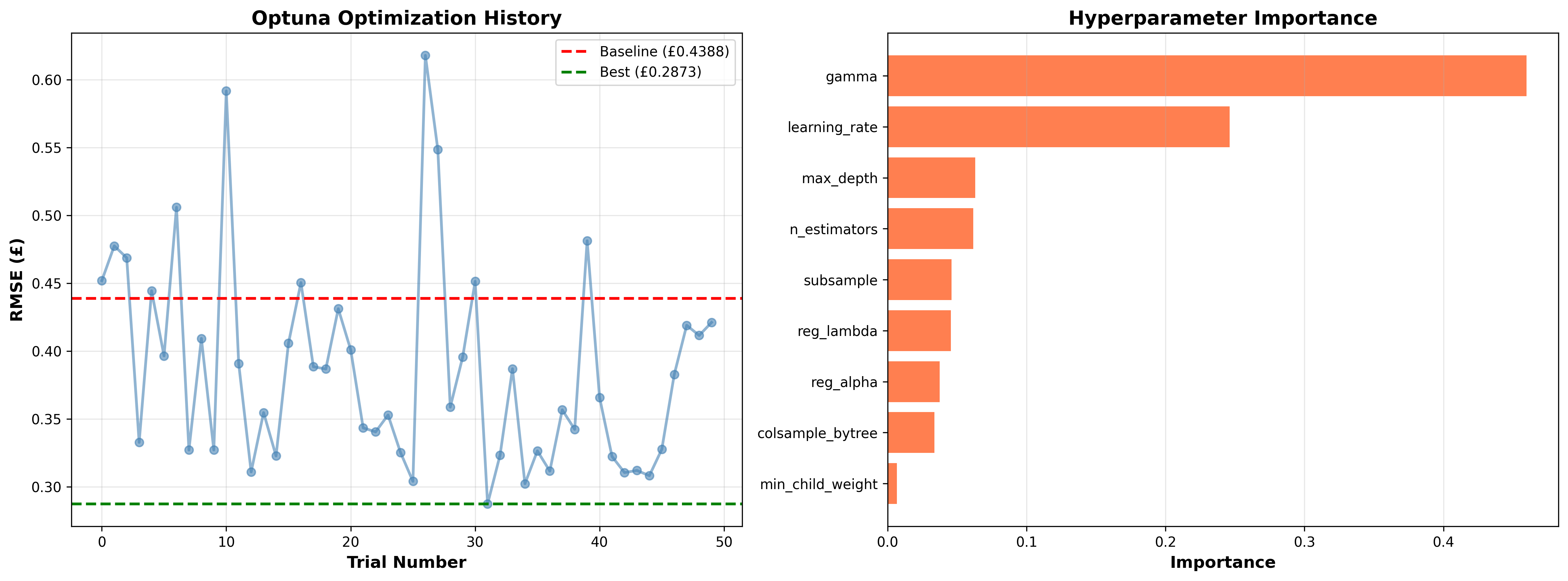
| Test RMSE | <₹0.20 | Predictions within 20p of actual price = owners trust recommendations |
| R² Score | >0.95 | Model explains >95% of price variance = captures key patterns |
| Training Time | <10 min | Weekly retraining must be fast to adapt to new patterns |
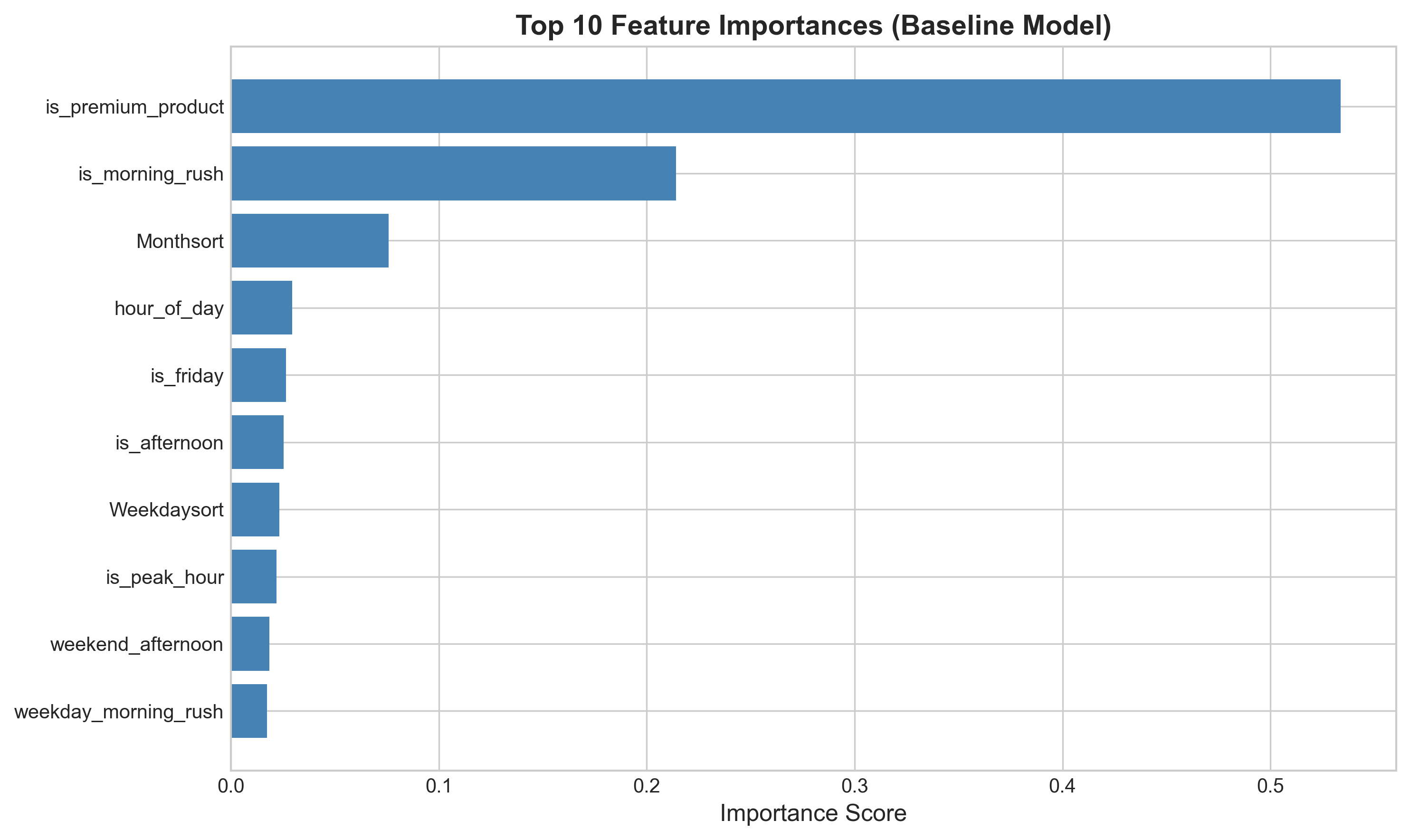
| Feature Stability | Top 5 features consistent week-to-week | Prevents "random" recommendation changes |
How We Monitor:
- Weekly model retraining report (automated)
- SHAP feature importance tracking (detect drift)
- Prediction confidence distribution (flag low-confidence periods)
System Reliability
| Metric | Target | Why It Matters |
|---|---|---|
| API Uptime | 99.5% | Downtime = owners can't get recommendations = manual pricing |
| Response Latency | <500ms | Fast predictions enable real-time POS integration |
| Dashboard Load Time | <2 sec | Slow UI = owners won't use product |
| Error Rate | <0.1% | Failed predictions = lost revenue opportunities |
How We Monitor:
- Datadog/Sentry for API monitoring
- Weekly uptime report
- Automated alerts for latency spikes
5. Counter-Metrics (Guardrails)
These metrics must NOT degrade, or we stop rollout immediately.
Customer Satisfaction (CSAT)
Definition: "How satisfied are you with your purchase today?" (1-5 scale)
Baseline: 4.2/5 (industry average for coffee shops)
Threshold: Must stay ≥4.0/5
Red Line: <3.8/5 = immediate rollback to static pricing
Why This Matters:
- Low CSAT = customers feel "ripped off" by dynamic pricing
- Even if revenue increases, unhappy customers will churn long-term
How We Track:
- Optional post-transaction survey (10% sample rate)
- Weekly CSAT trend analysis
- Correlate CSAT with price change magnitude (does +₹0.50 hurt satisfaction?)
Average Basket Size
Definition: Average # of items purchased per transaction
Baseline: 1.8 items/transaction
Threshold: Must stay ≥1.7 items/transaction
Red Line: <1.6 = dynamic pricing is cannibalizing upsells
Why This Matters:
- Higher prices might increase RPT but reduce basket size
- Net effect could be negative if customers buy fewer items
How We Track:
- Daily basket size analysis
- Segment by price change magnitude (high vs. low dynamic adjustments)
Brand Perception (NPS)
Definition: Net Promoter Score - "How likely are you to recommend this coffee shop?" (0-10)
Baseline: NPS 45 (good for food/beverage)
Threshold: Must stay ≥40
Red Line: <30 = brand damage from dynamic pricing
Why This Matters:
- Dynamic pricing could be perceived as "greedy" or "unfair"
- Long-term brand damage > short-term revenue gain
How We Track:
- Quarterly NPS survey (email to loyalty program members)
- Social media sentiment analysis (mentions of "price" or "expensive")
6. Experimental Framework
A/B Testing Methodology
Hypothesis: Dynamic pricing increases RPT by 8-12% without hurting retention
Test Design:
- Control Group: 50% of transactions use static pricing (baseline)
- Treatment Group: 50% of transactions use AI-recommended dynamic pricing
- Randomization: By hour (e.g., 8-9 AM = control, 9-10 AM = treatment)
- Duration: 4 weeks minimum (capture weekly seasonality)
- Sample Size: 3,547 transactions (current dataset) = sufficient for 95% confidence
Success Criteria:
- RPT lift ≥8% in treatment group
- No statistically significant decrease in retention
- No increase in complaints (tracked via owner logs)
Rollout Decision:
- Pass all 3 criteria → Full rollout
- Fail any 1 → Iterate and re-test
- Major failure (CSAT <4.0) → Kill feature
7. Reporting Cadence
Daily Dashboard (Streamlit App)
- Revenue: Today vs. Yesterday vs. Last Week
- RPT trend (7-day rolling average)
- Top 3 revenue-driving time slots
- Model confidence distribution
- System health (uptime, latency)
Weekly Business Review (Email Report)
- Sent every Monday 8 AM to shop owner
- Includes:
- Revenue lift % vs. static baseline
- Top 5 recommendations that drove revenue
- Customer satisfaction score
- Price acceptance rate
- Action items (if any)
Monthly Deep Dive (PDF Report)
- Sent first Monday of each month
- Includes:
- Cohort retention analysis
- Seasonal pattern analysis (month-over-month trends)
- Feature importance changes (SHAP analysis)
- Competitor benchmarking (if data available)
- Recommendations for next month
Quarterly Business Review (Executive Presentation)
- Presented to franchise owner / finance director
- Includes:
- OKR progress (all key results)
- ROI calculation (revenue lift vs. subscription cost)
- Customer case studies (testimonials)
- Roadmap for next quarter
8. Metrics-Driven Decision Framework
When to Double Down (Positive Signals)
- ✅ RPT lift >12% (exceeds target)
- ✅ Retention stable or improving
- ✅ High price acceptance rate (>85%)
- ✅ CSAT stable (≥4.2)
- Action: Expand to more locations, invest in V2 features
When to Iterate (Mixed Signals)
- ⚠️ RPT lift 5-8% (below target but positive)
- ⚠️ Price acceptance 60-80% (owners hesitant)
- ⚠️ CSAT 4.0-4.2 (slight decline)
- Action: Improve explainability, gather qualitative feedback, A/B test new strategies
When to Pivot (Negative Signals)
- ❌ RPT lift <5% (not worth complexity)
- ❌ Retention declining
- ❌ Price acceptance <60% (owners don't trust model)
- Action: Pause rollout, conduct user interviews, redesign core value prop
When to Kill (Failure Signals)
- 🛑 CSAT <3.8 (customers actively unhappy)
- 🛑 Retention <80% (losing customers)
- 🛑 NPS <30 (brand damage)
- 🛑 Complaints >5% (vocal backlash)
- Action: Immediate rollback to static pricing, post-mortem analysis
9. Attribution & Causality
Challenge: How do we know revenue lift is due to dynamic pricing, not external factors?
External Factors to Control For:
- Seasonality (holidays, summer vs. winter)
- Marketing campaigns (shop runs Instagram ad)
- Competitor actions (new cafe opens nearby)
- Weather (unusually cold week = higher demand anyway)
- Events (concert nearby = foot traffic spike)
Our Approach:
- A/B Testing: Control group isolates dynamic pricing effect
- Regression Analysis: Control for weather, day-of-week, holidays in model
- Synthetic Control: Build counterfactual baseline using similar shops without dynamic pricing
- Time-Series Decomposition: Separate trend, seasonality, and dynamic pricing effect
Confidence Level:
- High confidence: A/B test + regression both show 8%+ lift
- Medium confidence: Positive trend but noisy data (need longer test)
- Low confidence: External event (holiday) confounds results
10. Metrics Dashboard (Visual Mockup)
┌─────────────────────────────────────────────────────────────┐
│  AI DYNAMIC PRICING - METRICS DASHBOARD                     │
├─────────────────────────────────────────────────────────────┤
│                                                              │
│  📈 Revenue Per Transaction (RPT)                           │
│  Today: ₹4.65 (+10.7% vs baseline)  ✅ TARGET MET           │
│  7-Day Avg: ₹4.58 (+9.0%)                                   │
│  [───────▓▓▓▓▓▓─────] 90% confidence                        │
│                                                              │
│  👥 Customer Retention                                       │
│  This Month: 86% (baseline: 85%)  ✅ STABLE                 │
│                                                              │
│  🎯 Price Acceptance Rate                                    │
│  This Week: 78% (target: 80%)  ⚠️ SLIGHTLY BELOW            │
│                                                              │
│  ⭐ Customer Satisfaction (CSAT)                             │
│  This Week: 4.3/5 (baseline: 4.2)  ✅ IMPROVED              │
│                                                              │
│  🤖 Model Performance                                        │
│  RMSE: ₹0.18 (target: <₹0.20)  ✅                           │
│  Uptime: 99.7%  ✅                                           │
│                                                              │
└─────────────────────────────────────────────────────────────┘
11. Key Takeaways for Stakeholders
For Shop Owners:
- We track revenue, customer happiness, and your trust in the system
- If any metric goes red, we pause and fix before continuing
- You'll get weekly reports showing exactly how much more you're making
For Finance Directors:
- ROI is transparent: Revenue lift vs. subscription cost
- We measure both short-term gains and long-term brand health
- Monthly reports include confidence intervals (we don't oversell results)
For Operations Managers:
- We monitor complaint rates and staff confidence in explaining prices
- If complaints spike, we investigate root cause immediately
- Dashboard shows which time slots are most profitable
12. Appendix: Metric Definitions
Revenue Lift
Revenue Lift % = ((Dynamic Revenue - Baseline Revenue) / Baseline Revenue) * 100
Customer Retention
Retention % = (Customers in Month N who return in Month N+1) / Total Customers in Month N * 100
Price Acceptance Rate
Acceptance % = Recommendations Accepted / Total Recommendations * 100
CSAT Score
CSAT = Average rating (1-5 scale) from post-transaction surveys
NPS
NPS = % Promoters (9-10) - % Detractors (0-6)